
Dentures – Putnam, CT
Reliably Replace Your Missing Teeth

Do you need to find a way to reliably replace your missing teeth? While there are a variety of ways to successfully replenish your smile, you may want to opt for the traditional choice. With today’s dental technology, dentures in Putnam and partials can be crafted to fit well into your mouth, and they’re custom-made for your benefit. Please contact us to schedule your denture and partial consultation. You’ll be one step closer to having a fully restored appearance!
Why Choose Quiet Corner Dental for Dentures?
- Dental Insurance Accepted & Low-Interest Financing Available
- Comfortable, Accurate Digital Impression Technology
- Lifelike, Durable Materials Used
Who’s a Good Candidate for Dentures?

Dentures are a flexible and relatively inexpensive solution for patients who have lost some or all their natural teeth. At Quiet Corner Dental, we offer multiple options when it comes to denture prosthetics to help restore your smile and improve your quality of life. But who are dentures for, exactly? Well, everyone!
Whether you need full or partial prosthetics, our team will work with you to create a customized solution that fits your needs. If you’re curious about your own denture candidacy, read more below to see if they might be just what you need!
Effects of Missing Teeth

Missing teeth can impact more than just your appearance. Over time, tooth loss can lead to multiple issues, such as:
- Bone Loss: Without the stimulation from tooth roots, the jawbone begins to deteriorate.
- Shifting Teeth: Remaining teeth can shift into gaps left behind, leading to misalignment and bite issues.
- Difficulty Chewing and Speaking: Missing teeth can make it harder to eat your favorite foods or speak clearly.
- Facial Changes: Tooth loss can cause the facial muscles to sag, leading to a prematurely aged appearance.
- Mental Health Difficulties: Losing teeth isn’t easy physically or mentally. Many patients who lose teeth feel guilty or depressed about their smiles, leading to decreased self-esteem.
What Are the Qualities of a Great Candidate for Dentures?

So, what qualities does our practice look for in a great denture candidate? While most patients can get dentures, we often check for:
- Significant Tooth Loss: Whether you're missing most or all your teeth, dentures can help restore function and appearance.
- Healthy Gums: Dentures rely on healthy gums for support, so a good candidate should have firm, pink gums with no signs of disease.
- Sufficient Bone Structure: For implant-supported dentures, candidates need enough jawbone to anchor the implants. Even without implants, having good bone structure will help your prosthetics sit come comfortable and function easier.
- Commitment to Oral Hygiene: If you already have a great oral hygiene routine, that’s fantastic! However, even if you need some guidance, a can-do attitude when it comes to oral care goes a long way.
Alternative Tooth-Replacement Options
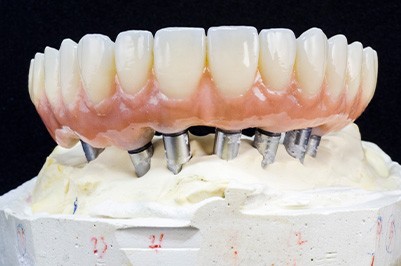
While dentures are a popular and highly effective solution for tooth loss, there are other tooth-replacement options available, including:
- Dental Implants: These permanent, natural-feeling fixtures involve placing a titanium post into your jawbone to support a crown, bridge, or even a set of customized dentures!
- Dental Bridges: These prosthetics are ideal for patients missing only one or a few teeth, bridges anchor to surrounding teeth for a secure fit.
Each of these options has its own set of advantages. At Quiet Corner Dental, our team will help you explore all possibilities and choose the best treatment for your needs and lifestyle. Reach out to us today to schedule your consultation and discover how dentures can improve your quality of life.
Types of Dentures
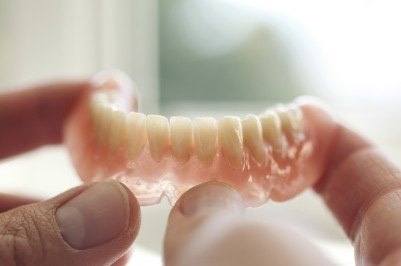
Individuals with missing teeth will be pleased to learn there are three types of dentures that we offer: partial, full, and implant dentures. During your consultation, you and your dentist will determine which one is right for you.
Partial Dentures
A partial replaces one to three teeth in a row and stays in place by clipping onto teeth that are adjacent to the space in your smile. Made of gum-colored acrylic, its base blends in with your natural gums, while artificial teeth help to fill in the gaps to create a full, complete smile.
Full Dentures
Full dentures are used to take the place of every tooth in the upper gums, lower gums, or even in the entire mouth. These maintain their spot with the help of suction and denture cream. Full dentures are made from the same materials are partial dentures, and they look and feel more natural than those created decades ago.
Implant Dentures
Implant dentures are unlike their traditional counterparts in that they are permanent because of the titanium posts that are implanted into the jawbone. Made to mimic natural tooth roots, these screw-like prosthetics fuse with the bone over several months through a process known as osseointegration. A customized denture is then placed on top and secured to the implant posts, allowing for improved functionality and aesthetics.
Benefits of Dentures

Dentures are known to be one of the most reliable tooth replacement solutions available. Because they’ve been used for decades and even centuries, they remain popular among patients suffering from tooth loss. A few of the many benefits you can expect when choosing dentures include:
- A youthful appearance that helps to boost your confidence
- Greater facial shape because of how your dentures fill out the hollowed areas
- A stronger bite force and chewing power
- Prosthetics that can last years (full and partial dentures) or 30+ years (implant dentures)
- Greater jawbone stimulation to prevent facial sagging (implant dentures)
Understanding the Cost of Dentures
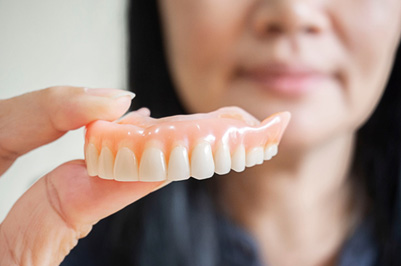
Dentures are a proven solution for tooth loss and remain a popular treatment today because of their versatility. Regardless of how many natural teeth you have remaining, our Quiet Corner Dental team can provide a lifelike restoration to rebuild your mouth’s appearance and functionality.
But it’s natural to have questions before proceeding with this service, and one of the first things many patients wonder about is the cost. Continue reading to learn more about how pricing is determined and how our team helps make dental care more affordable!
Factors That Affect the Cost of Dentures
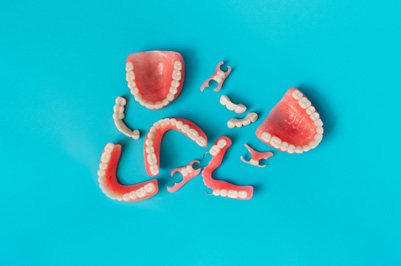
A few different factors can potentially impact the cost of your new teeth, including:
- Additional services. If you have natural teeth that must be removed or require gum disease treatment or other dental procedures, you’ll be required to pay for those, also.
- The base materials. The gum-colored foundation of your dentures can be made from options like acrylic or resin, which can influence the rate.
- The type of replacement teeth. The teeth can be designed from acrylic or porcelain, and can also affect the total price of your restoration.
Are Implant Dentures More Expensive?
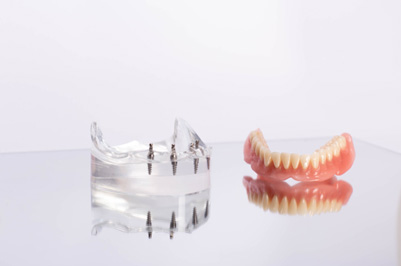
Those seeking a more permanent and reliable treatment might benefit from getting implant dentures. This option involves surgically placing four to eight support rods in your jaw, which eventually fuse with the bone and can anchor a specially designed set of dentures that’s not typically removable.
This service often incurs higher upfront costs due to oral surgery. However, these restorations typically last 15+ years with proper care. Meanwhile, standard dentures may need to be replaced every 5 to 7 years, which can add up over time.
Does Dental Insurance Cover Dentures?

Dental insurance plans often cover about 50% of major procedures, such as getting dentures. However, there are no guarantees, and every policy is different, so it’s worth verifying your information to understand what’s included.
If you’re struggling to find the information or need help with claims or paperwork, please don’t hesitate to ask for assistance. Our friendly office staff is familiar with the process and is happy to help you maximize your available benefits!
Other Options for Making Dentures Affordable

Dentures can potentially improve your daily quality of life for years to come, and our compassionate team in Putnam believes that everyone deserves to feel confident with their smile. If you’re uninsured and are concerned about the cost of this service, you can apply for flexible financing through CareCredit.
If you’re approved, these no-to-low interest payment plans allow you to divide your total invoice into more manageable installments that are paid over a designated period.
Denture FAQs
Am I A Good Candidate for Dentures?
Dentures are the tried-and-true solution for tooth loss, but there are three different types, and not everyone is an ideal candidate for each. Before proceeding, you must consult one of our providers so they can examine your condition and recommend an appropriate solution based on their findings.
For example, if you’re missing entire arches, we’ll likely suggest a complete set of dentures. However, if you’ve lost a few teeth sporadically throughout your smile, a partial set might be a better fit. Meanwhile, those seeking a more permanent solution for tooth loss and who are healthy enough to undergo oral surgery might benefit from getting implant dentures.
What’s the Average Age for Getting Dentures?
Many people associate dentures with aging because tooth loss is more common among senior adults. For example, sources report that about 66% of those between 40 and 64 years old have lost at least one tooth, compared to only about 33% of those who are 20 to 39 years old.
But tooth loss can impact people from all walks of life, regardless of their age. Whether you’ve lost teeth due to an oral issue, like cavities or gum disease, or sustained an injury that knocked one or more out, our team in Putnam is happy to provide customized prosthetics to restore your smile’s appearance and functionality.
Can I Sleep With My Dentures In?
Are you wondering if it’s okay to fall asleep with your dentures in your mouth? It might not cause too much damage if it happens accidentally now and then, but generally it’s not recommended. Your restoration forms a tight bond against the tissues over the bony ridges in your mouth to remain in place all day. This reduces the circulation to your gums, preventing your body from delivering essential nutrients or infection-fighting cells to your teeth and gums.
Unfortunately, this increases the risk of developing issues like periodontal disease because unhealthy germs can thrive in these conditions. Not only that, but you might develop sores or blisters that make it uncomfortable to wear your n ew teeth.
As a result, we usually recommend that you leave them in glass or room-temperature water, or a special soaking solution, to eradicate bacteria and maintain their shape while you sleep. This also gives your gums a much-needed reprieve to rest and recover.
Is it Hard to Talk with Dentures?
If you’ve recently started wearing dentures regularly and have noticed that you’ve developed a lisp or slur when pronouncing certain sounds or words, you’re not alone. Plenty of patients experience a temporary speech impediment until their tongue and other tissues in their mouths acclimate to their prosthetics.
Thankfully, this is usually temporary and resolves itself within a few weeks to about a month. You can ease this transition by practicing reading out loud to yourself at home, where you don’t need to worry about being judged, until you feel more confident in your enunciation.